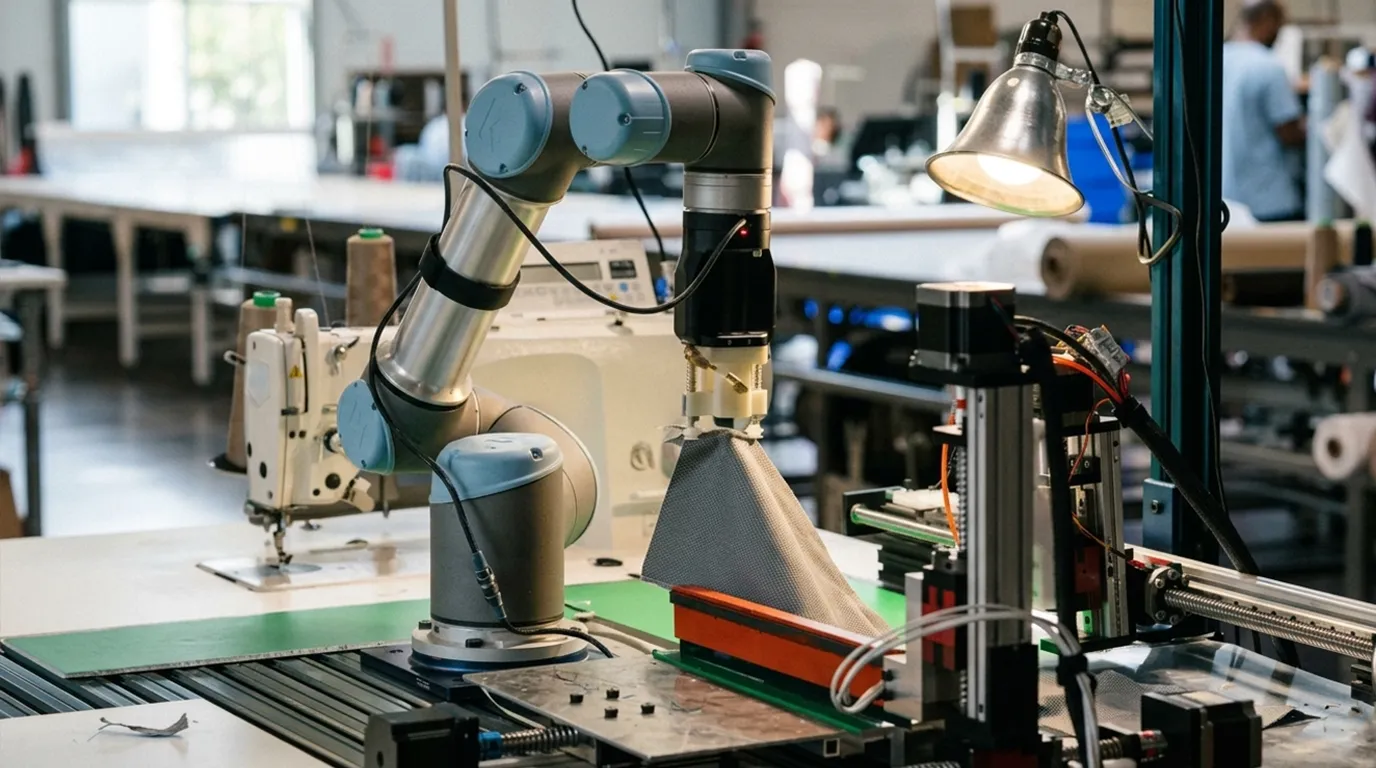
The apparel industry moves a trillion dollars a year. It employs over 300 million people globally. And for most of its modern history, it has resisted technology more stubbornly than almost any other industry on the planet.
The factory floor still runs on relationships, gut instinct, phone calls, and spreadsheets that haven't fundamentally changed since the 1990s. Purchase orders still get lost in email chains. Quality gets eyeballed. Lead times are guesses wrapped in optimism.
we've spent 16 years inside this industry on factory floors in Bangladesh, in trim markets in Guangzhou. The inefficiencies aren't a secret. They're structural. They're baked in.
Which is exactly why what's happening right now is so significant.
AI isn't coming to apparel manufacturing. It's already here. And the brands that understand where it's actually adding value versus where it's still hype, will have a meaningful edge in the next three to five years.
Here's the unfiltered version of what's changing.
1. Demand forecasting is getting dramatically smarter
Overproduction is the original sin of fashion. The average brand sends 30–40% of its inventory to markdown, discount, or destruction. That's not a supply problem. It's a forecasting problem.
Traditional demand forecasting leaned on historical sales data. Sell 5,000 units of a bomber jacket last fall? Order 5,500 this fall. The model was linear, slow, and completely blind to what was actually happening in the market right now.
AI-driven forecasting changes the input set entirely. Models now ingest social sentiment, search trend velocity, influencer engagement rates, weather patterns, competitor pricing signals, and real-time sell-through data. The models now synthesize them into probabilistic demand curves that update weekly, not seasonally.
For a startup brand placing its first production run, this matters enormously. The difference between ordering 800 units and 1,200 units of the wrong SKU isn't just a financial hit, it can be an existential one. Better forecasting at the front end means fewer catastrophic overbuys and underbuys downstream.
2. Quality control is moving from the end of the line to the beginning
Here's something most brands don't know: by the time a quality issue is caught at final inspection, it's already too late. The garments are sewn. The fabric is cut. The trims are attached. Your only options are rework, scrap, or ship garbage.
Traditional QC is reactive. AI-powered QC is predictive.
Computer vision systems embedded on the cutting floor can now detect fabric defects, weaving irregularities, shading variations, print misalignments before a single pattern piece is cut. Inline sewing inspection tools flag seam tension issues and stitch density deviations in real time, not at the end of a production run.
The practical result: defect rates that used to run 3–8% on offshore production are being cut to under 1% in factories deploying these systems. That's a fundamental shift in what "quality guarantee" can actually mean.
For brands placing orders with factories they've never visited, the accountability gap used to be enormous. AI narrows that gap in ways that paper inspection reports never could.
3. Supply chain transparency is no longer optional. Now AI is making it possible
The dirty secret of global apparel sourcing is that most brands genuinely don't know where their product is made. They know their Tier 1 factory. They have no idea who spun the yarn, who wove the fabric, or who made the buttons.
That opacity carries real reputational, regulatory, and financial risks. Forced labour audits, country-of-origin compliance, extended producer responsibility legislation in the EU and Canada. The regulatory environment is tightening fast, and ignorance is no longer a legal defence.
AI now enabling a new generation of traceability tools: blockchain-anchored material passports, isotope testing for fibre origin verification, digital thread IDs that travel with a garment through every production stage. Brands can now answer "where was this made, and by whom?" with something more than a shrug.
Real-time supply chain visibility platforms now help tracking production milestones, in-transit shipments, customs clearance, and delivery confirmation. The information lags are collapsing which used to make offshore production feel like sending money into a black hole.
Brands that build this transparency infrastructure now won't just be compliant but also becoming marketing asset. "We know exactly where every component of this garment came from" is a powerful story.
4. Design and trend intelligence is accelerating product development
Getting to market faster is not optional in fashion anymore. The trend cycle has compressed from 18 months to 18 weeks in some categories. Speed to shelf is a competitive weapon.
AI-powered trend intelligence platforms now monitor runway shows, street style content, social media aesthetics, search data, and retail sell-through simultaneously. Those helps identifying emerging micro-trends weeks before they hit mainstream awareness. Some brands are using these signals to inform product development in real time, essentially shortcutting the traditional trend-forecasting calendar.
On the design side, generative AI tools are accelerating the ideation phase. Producing hundreds of colourway variations, print iterations, or silhouette explorations in hours rather than weeks. Tech pack generation tools are starting to auto-populate construction details, reducing the back-and-forth between design and production teams.
None of this replaces the creative director. But it compresses the time between creative vision and production-ready specification. Which adds real value for any brand running lean.
5. Logistics and pricing optimization are reducing hidden costs
The freight & logistics sector has been aggressively deploying AI for the last several years to make the apparel brands the direct beneficiary.
Dynamic routing algorithms optimize container loading and carrier selection in real time based on port congestion, transit time variability, and spot rate fluctuations. Predictive delay modelling flags likely disruptions weeks in advance, giving brands time to adjust inventory positions. Customs classification tools are reducing clearance delays and misfiling penalties.
On the pricing side, AI-powered cost modelling is bringing transparency to a part of the supply chain that has historically been opaque by design. Raw material price forecasting, currency hedging signals. The labour cost indexing are giving brands a genuine view of what their product should cost, not just what their vendor is charging for the first time.
This matters most for brands that have historically relied on sourcing agents or trading companies, where the margin stack is deliberately obscured. When you know what a garment actually costs to produce, you know when you're being taken.
What this means if you're building a brand right now
Here's the honest take: most of these AI tools are not yet accessible to a startup placing 300-unit orders. The enterprise platforms are expensive. The integration is complex. The learning curve is steep.
But the factories and manufacturing partners who are deploying them? They're already processing your competitors' orders. And the gap between what's available to large brands and what's available to small brands is closing faster than most people expect.
The practical implication is this: where you manufacture, and who you manufacture with, now determines your access to these capabilities. A sourcing agent running 15% commission on top of a trading company's margin, with zero visibility into the factory floor, isn't just expensive. In an AI-enabled world, they're leaving you behind.
The brands that will win in the next decade are building manufacturing relationships that give them data, visibility, and control, not just units at the lowest price. Those are fundamentally different criteria than most brands have used to evaluate their manufacturing partners.
The intersection of AI and accountability
Technology doesn't fix bad incentives. The most sophisticated demand forecasting model in the world won't protect you if your factory partner is hiding subcontracting. The best computer vision QC system doesn't help if there's no one on the floor making sure it's actually being used.
This is the part of the AI conversation that gets skipped over: the human infrastructure still matters. Embedded teams. Real relationships. Accountability structures that mean something.
At Kloth Source, we've built the technology layer. Real-time production tracking, transparent costing, milestone visibility on top of a foundation of factory equity stakes & on-the-ground floor managers. Because the data is only useful if someone is responsible for acting on it.
That combination of AI-enabled visibility with human accountability is what actually moves the needle for growing brands.
The bottom line
The apparel industry's resistance to technology has always been rooted in relationship opacity. Agents who don't want you to see their margin. Factories that don't want you counting their defects. Trading companies that profit from information asymmetry.
AI is dismantling that opacity, piece by piece.
For brands willing to work with manufacturing partners who embrace that transparency rather than resist it. The next few years represent an extraordinary opportunity to build leaner, faster, and with far more control than was ever possible before.
The question isn't whether AI will reshape clothing manufacturing.
It's whether your supply chain will be on the right side of that shift.
Kloth Source is a managed apparel manufacturing company based in Toronto, serving North American fashion brands from 100 units. We hold equity stakes in factories across Bangladesh, India, China, and Vietnam and give every client full visibility into their production through our real-time portal.
Tags: #ApparelManufacturing #FashionTech #Sourcing #SupplyChain #ClothingBrands #AIinFashion #KlothSource
